Large Commercial Bakery — CCHP & Solar PV Case Study | Skyline DC Energy
Skip to main content
Back to Home
Commercial bakery production line
Delivered

Large Commercial Bakery

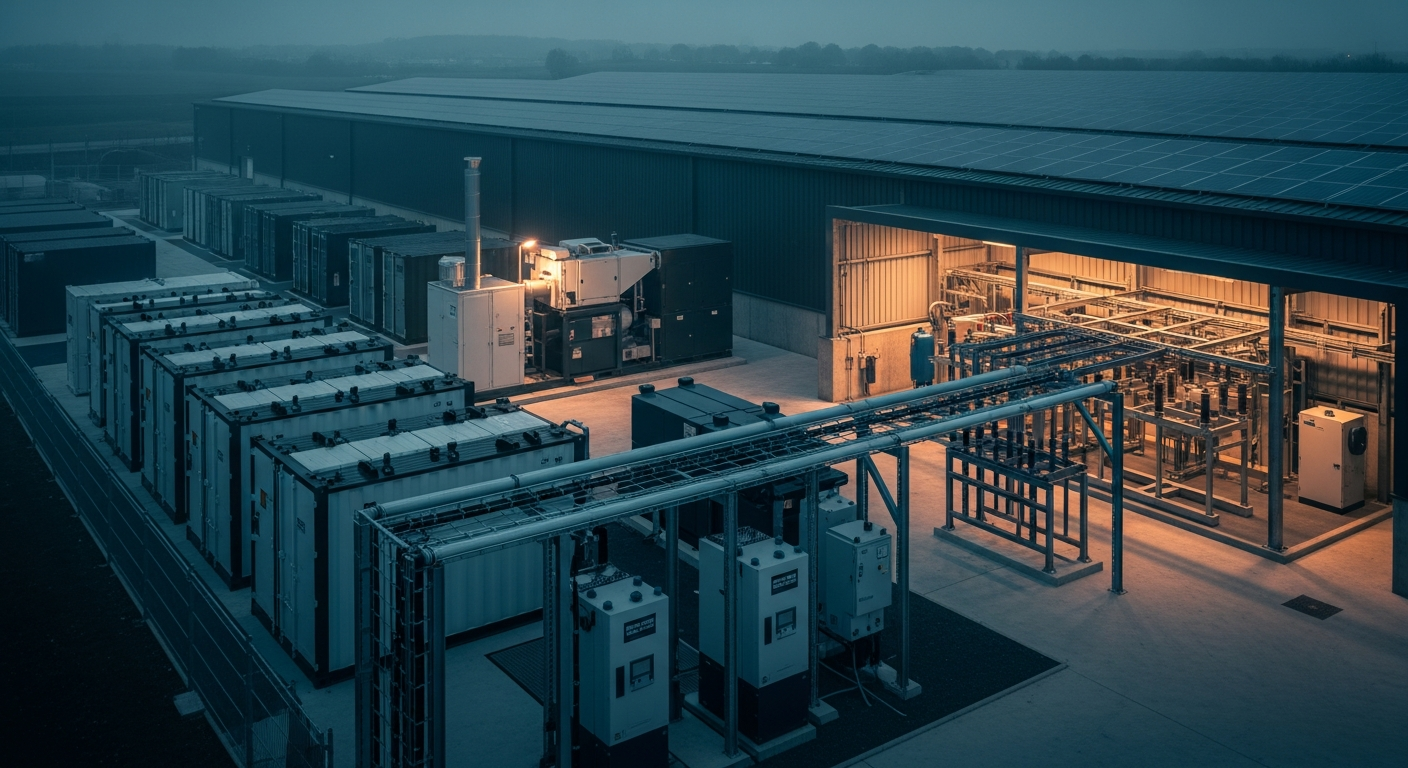
Integrated 1.2MW Cogeneration (CHP) unit with a 500kWp rooftop solar array. Reduced grid reliance by 74% and secured thermal baseload for ovens, protecting margins against volatile gas prices.

74%

Grid Reliance Reduction

£425k

Annual Savings

3.8 yrs

Payback Period

The Client

A large commercial bakery in the Midlands producing 12,000 loaves per day, with a 24/7 production schedule. The site consumed 2.8GWh of electricity and 1.4GWh of gas annually, with an energy bill of £784,000. The peak electricity demand was 1.2MW during the baking window (6am–2pm), and the peak thermal demand was 1.4MW for oven heating and proofing.

The Challenge

The bakery was exposed to volatile energy prices. In 2022, the energy bill spiked to £1.2m, and the business was forced to absorb the cost to remain competitive. The management wanted a long-term solution that would lock in energy costs and protect margins. The site had 6,000m² of roof space, but the roof was not structurally suitable for a full solar array without reinforcement.

The Skyline Approach

We started with a 12-month interval data analysis. The data revealed that the bakery's thermal demand was 60% of total energy consumption, and the peak thermal demand was 1.4MW. This was the key insight: the site's thermal demand was higher than its electrical demand, and the thermal demand was steady. This is the ideal profile for a CCHP (Combined Cooling, Heat and Power) system.

  • Thermal demand (60% of total) exceeded electrical demand — ideal CCHP profile
  • Solar-only saved £150k/yr but required structural roof reinforcement
  • CCHP-only saved £350k/yr but left 6,000m² of roof space unused
  • Hybrid scenario — CCHP plus solar — optimal at £425k/yr with no reinforcement

We then modelled three scenarios: solar-only, CCHP-only, and hybrid. The hybrid scenario — CCHP plus solar — saved £425,000/year and used the roof space without reinforcement.

The Solution

1.2MW CCHP Unit

Natural gas cogeneration unit generating 1.2MW electricity and 1.4MW heat simultaneously. The unit runs 6,000 hours per year at 85% total efficiency. Annual electrical savings: £280,000. Annual thermal savings: £98,000.

500kWp Solar Array

Rooftop solar array on the bakery's dispatch warehouse (2,000m²). The roof was structurally suitable, and the array generates 450MWh/year. Annual savings: £47,000.

The Results

MetricBeforeAfter
Annual electricity from grid2,800 MWh730 MWh (-74%)
Annual gas consumption1,400 MWh420 MWh (-70%)
Total energy cost£784,000£359,000 (-54%)
CO₂ emissions820 tonnes440 tonnes (-46%)
Peak demand charge£64,800/year£18,000/year (-72%)

The Operational Impact

The bakery's production manager reported that the most significant change was not the cost savings but the operational resilience. The CCHP unit provides a baseload electricity supply that is independent of grid volatility. During the April 2025 cold snap, when grid prices spiked to 120p/kWh, the bakery's marginal electricity cost was locked at the gas price of 6.5p/kWh. The production schedule was unaffected, and the margin was protected.

The solar array generates during the day shift, when the bakery's non-thermal electrical demand is highest. The CCHP unit runs continuously, providing baseload heat for the ovens and proofing rooms. The combination means the bakery only draws grid power during the night shift and during maintenance periods.

The Technology-Agnostic Approach

The key to this project's success was the technology-agnostic design. We did not arrive with a pre-determined solution. We started with the data, modelled the options, and recommended the hybrid system because it was optimal for this specific site. A solar-only system would have saved less. A CCHP-only system would have left roof space unused. The hybrid was the right mix.

If you operate a site with high thermal demand and a steady operational profile, a hybrid system may be the right answer. We offer free feasibility studies that model your specific data and recommend the optimal technology mix.

See What We Can Do for Your Site

No commitment, no cost — just a detailed assessment of your site's energy potential, with clear recommendations and financial projections.

Ready to Cut Your Energy Costs?

Get a free, no-obligation audit from our certified engineers — and discover exactly where you can save.