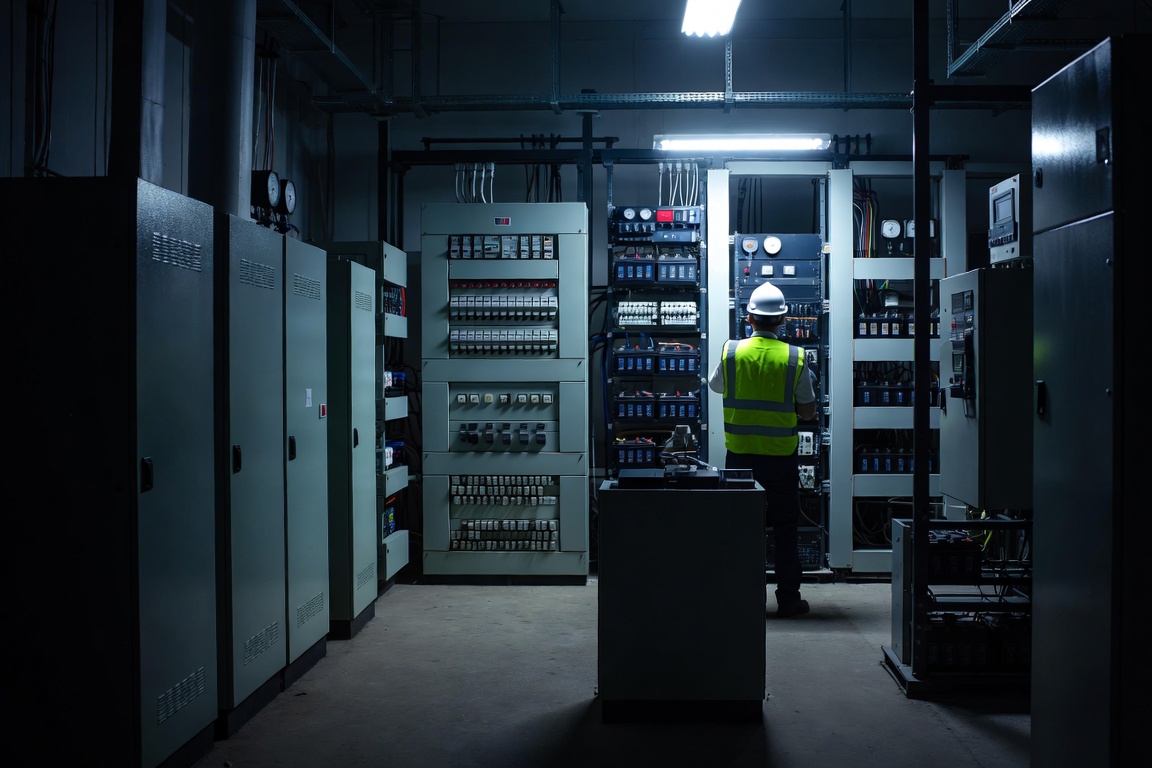
Zero-Downtime Power Protection for Critical Operations
Industrial-grade Uninterruptible Power Supplies engineered for your load profile — from server room protection to full-site critical power systems with generator integration.
What You Need to Know
Every commercial and industrial site has loads that simply cannot tolerate a power interruption — clinical IT systems, production line controllers, data centre servers, refrigeration plant, and building management systems. When the grid fails, even a 20-millisecond interruption is enough to crash servers, corrupt data, halt a production run, or trip a building management system into a lockout state. An industrial Uninterruptible Power Supply (UPS) eliminates that vulnerability by holding the load seamlessly on stored battery energy while the upstream supply is restored or a backup generator reaches stable output.
The right UPS topology depends on the sensitivity of your load and your acceptable level of risk. Online double-conversion UPS systems — the standard for healthcare, data centres, and precision manufacturing — regenerate a clean, regulated output continuously from the battery inverter, delivering zero transfer time and complete isolation from mains-borne disturbances such as voltage sags, surges, and harmonics. Modular UPS architectures allow capacity to scale from tens of kilowatts to several megawatts by adding battery and inverter modules in the same frame, with N+1 redundancy built in so a single module failure never takes down the protected load. For less sensitive loads, line-interactive UPS systems provide cost-effective protection against outages and voltage variations with a short (4–8 ms) transfer time.
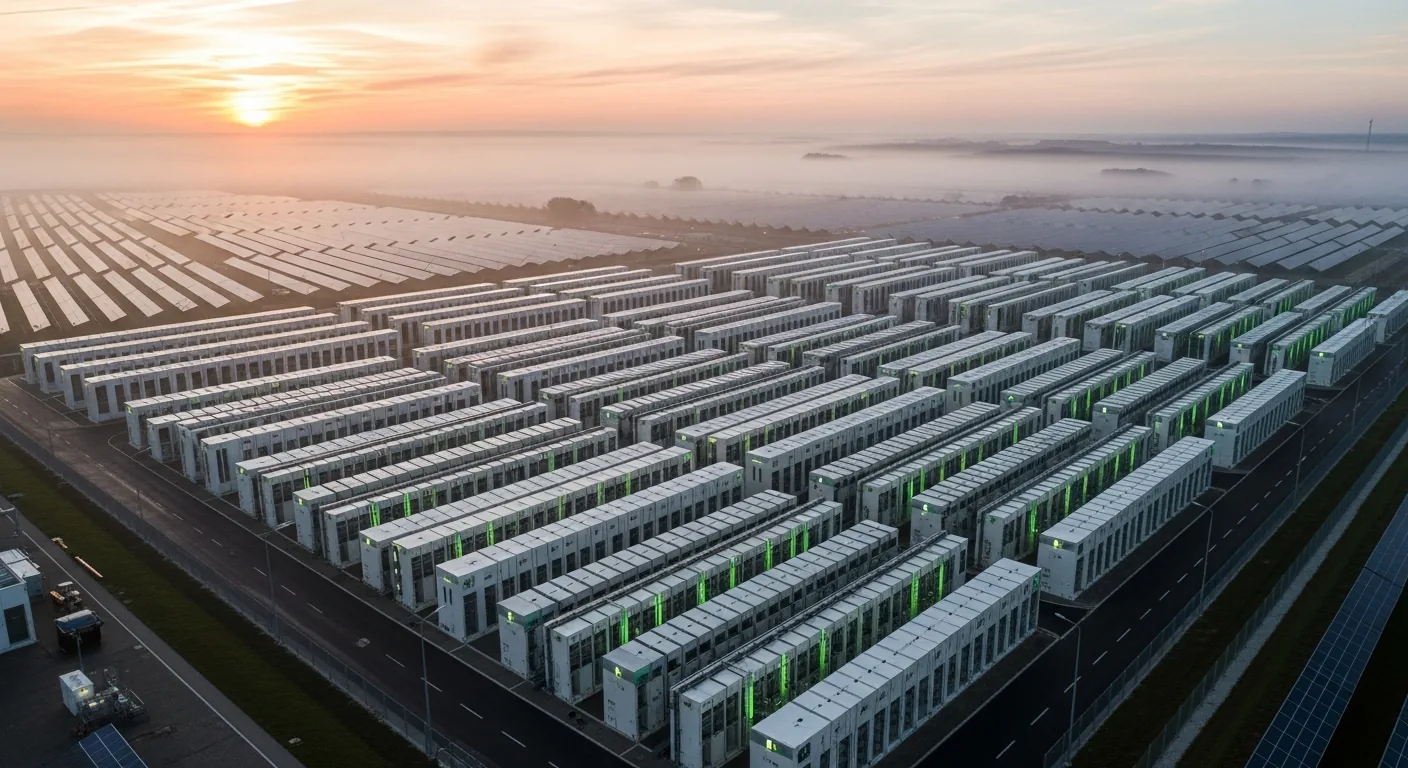
A UPS rarely operates in isolation. For sites where grid outages last longer than the battery runtime allows, a diesel or gas backup generator is coordinated to start automatically on mains failure — the UPS provides clean ride-through power for the 10–30 seconds it takes the generator to reach stable voltage and frequency. At sites with an on-site battery energy storage system (BESS) or solar PV, the UPS integrates with the BESS control system so that stored energy from the battery plant extends runtime beyond what standalone UPS battery strings could achieve. Remote SNMP/IP monitoring and a preventive maintenance contract ensure the system is load-tested annually, batteries are capacity-checked every 12–18 months, and any degradation is caught before it becomes a fault. Skyline DC Energy manages the full critical power system — UPS, battery strings, bypass switchgear, and generator interlock — under a single engineering and maintenance contract.
The moment the grid fails
An online UPS holds your critical load with sub-millisecond transfer, bridging the seconds it takes a generator to reach stable output — the protected load never sees an interruption.
Grid failure event
Zero-gap power for critical loads
The Numbers That Matter
- Transfer time
- <1 ms
- Typical battery runtime
- 5–30 min
- System efficiency
- Up to 97%
- System life
- 10–15 years
online double-conversion topology
extended with additional strings
ECO / modular mode
with battery replacement cycles
Our Delivery Process
A UPS system must be matched to your load topology, runtime requirement, and downstream generator or BESS. We size and specify the right solution from the start.
Load and criticality assessment
We survey your critical loads, tolerable interruption time, and power quality requirements to define the UPS specification and topology (online double-conversion, line-interactive, or modular).
System design and topology selection
Capacity (kVA/kW), battery runtime, and bypass configuration are designed to meet your uptime SLA — from 5-minute ride-through to 30+ minute standalone backup.
Installation and commissioning
UPS cabinets, battery strings, and static transfer switches are installed and integrated with your existing generator, building management system, or BESS as required.
Remote monitoring and maintenance
All systems are commissioned with remote SNMP/IP monitoring, alerting, and a preventive maintenance contract — ensuring the system is always available when needed.
Proven on Real Sites
NHS Trust Facility, South West England
Zero unplanned downtime across 3 years
A 200 kVA online double-conversion UPS with 15-minute battery runtime and automatic generator start was installed to protect critical clinical IT and building management systems, replacing an ageing single-conversion unit that had caused two data-loss events.
Get a similar resultTechnology-Agnostic. Engineer-Led.
Independent advice
We specify the right technology for your site, not the product we sell.
Whole-life economics
Every recommendation is modelled against your actual half-hourly interval data.
Complete delivery
Design, planning, installation, commissioning, and ongoing optimisation under one contract.
Measurable carbon savings
We quantify Scope 2 reductions for your SECR and ESG reporting.
Proven track record
Projects across manufacturing, food & beverage, logistics, and data centres across the UK.
Performance assurance
Where applicable, generation and savings are backed by contractual performance terms and manufacturer warranties.
Frequently Asked Questions
Free feasibility study
Book a free site assessment
Our engineers review your interval data and deliver a no-obligation feasibility study with technology recommendations, financial modelling, and payback projections.
Request a quote for UPS / Critical Power
Tell us about your site and we'll get back to you within one business day with a tailored proposal.
Sectors We Serve
Bakeries & Food Production
Constant thermal and refrigeration loads make food production a strong fit for cogeneration, storage and heat recovery.
Explore sectorWarehouses & Logistics
Large roofs, fleet charging and heavy peak demand make logistics sites ideal for on-site generation and storage.
Explore sectorAggregates & Heavy Industry
High, spiky power demand and remote sites suit private grid capacity, storage and resilient backup power.
Explore sectorReady to explore UPS / Critical Power for your site?
Book a free site assessment. Our engineers will evaluate your load profile and deliver a tailored feasibility study.