With grid volatility and peak pricing at record highs, industrial-scale BESS is now the most cost-effective way for high-demand sites to shield against price shocks.
The Numbers Behind the Shift
In April 2026, the UK's average industrial electricity price reached 26.8p/kWh — the highest since the 2022 energy crisis. But the real pain is in the peak: during the evening demand window (4pm–7pm), prices regularly spike to 80–120p/kWh. For a site consuming 500kWh during those hours, that's £400–£600 per day in peak charges alone.
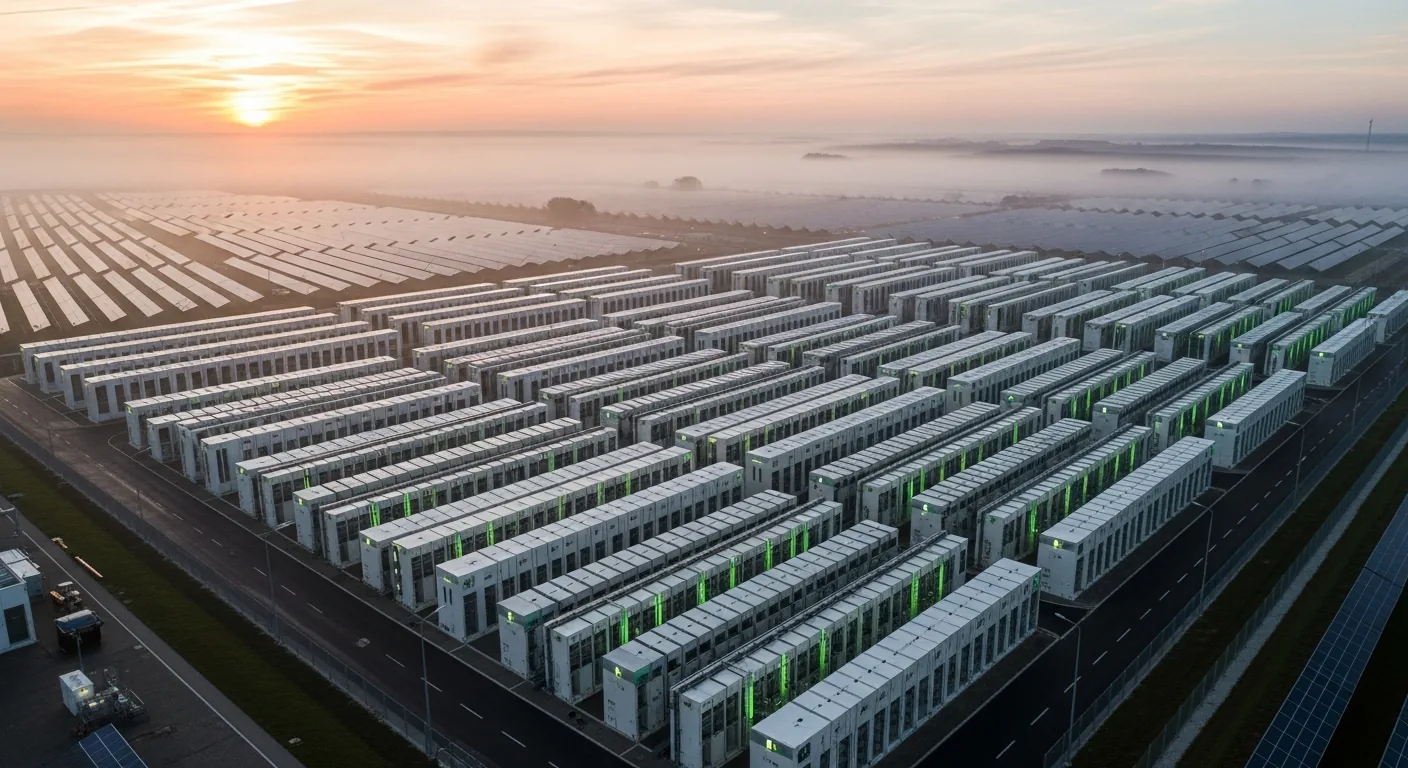
Battery energy storage systems (BESS) solve this by shifting consumption. A 1MWh battery system charged overnight at 12–15p/kWh can discharge during peak hours, effectively replacing 80p/kWh grid power with 15p/kWh stored power. The arbitrage savings for a typical industrial site are £40,000–£80,000 per year, depending on the load profile.
The Technology Is Now Mature
Five years ago, lithium-ion battery storage for industrial sites was experimental. Today, it's a proven commodity. The shift is driven by three converging factors:
Battery Cost Collapse
LFP battery pack prices have fallen from £350/kWh in 2020 to £95/kWh in 2026. A 1MWh system that cost £350,000 five years ago now costs under £100,000.
Smart Grid Integration
Modern inverters and energy management systems can automatically respond to grid signals, participating in frequency response and capacity markets for additional revenue.
Lifespan Confidence
LFP batteries now come with 10,000 cycle warranties (approx. 15 years at daily cycling). Degradation is predictable and modelled into financial projections.
Case in Point: A Midlands Distribution Centre
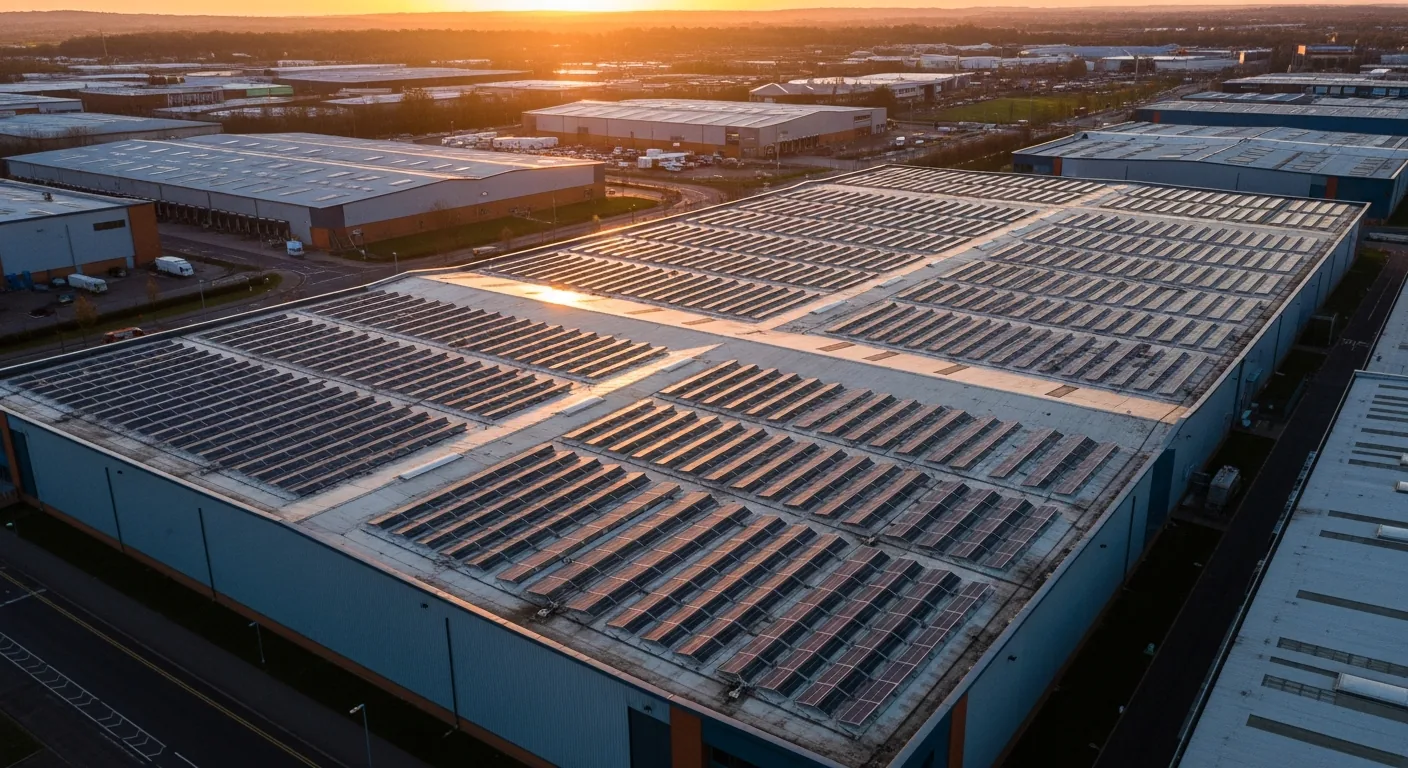
We recently installed a 1.5MWh BESS alongside an existing 800kWp solar array at a 200,000 sq ft distribution centre in the Midlands. The site was already exporting solar during the day, but the grid export tariff was only 8p/kWh. By adding the battery, we shifted that export to the evening peak, where it displaced 78p/kWh grid imports.
The result: annual savings of £112,000, payback period of 4.2 years, and a 10-year NPV of £340,000. The system also provides full UPS backup for the site's cold storage, eliminating the risk of a £50,000+ stock loss during a grid outage.
Sizing Matters: The 80/20 Rule
The most common mistake we see is oversizing. A battery that's too large for the site's consumption profile will never fully cycle, leaving capacity — and capital — wasted. Conversely, an undersized battery will cycle fully but miss peak savings opportunities.
The correct approach is to analyse 12 months of half-hourly consumption data. We look for the peak demand window and size the battery to cover the worst 20% of hours — the ones that drive 80% of the peak costs. For most sites, this means a battery sized at 2–4 hours of peak load, not 8–12 hours. The savings are concentrated, and the battery should be too.
Is It Right for Your Site?
Battery storage works best for sites with a predictable peak demand pattern and a consumption profile that can absorb a 2–4 hour discharge. If your site runs flat-out 24/7, the economics are different — you may be better served by a baseload technology like CCHP or a larger solar array. If your peak is 6–8 hours per day, a battery is almost certainly the fastest path to grid independence.
We offer free feasibility studies that model your specific load profile against current battery costs and grid pricing. The analysis takes 48 hours and gives you a clear payback period, NPV, and optimal battery size. No commitment, no cost — just the data you need to make a decision.