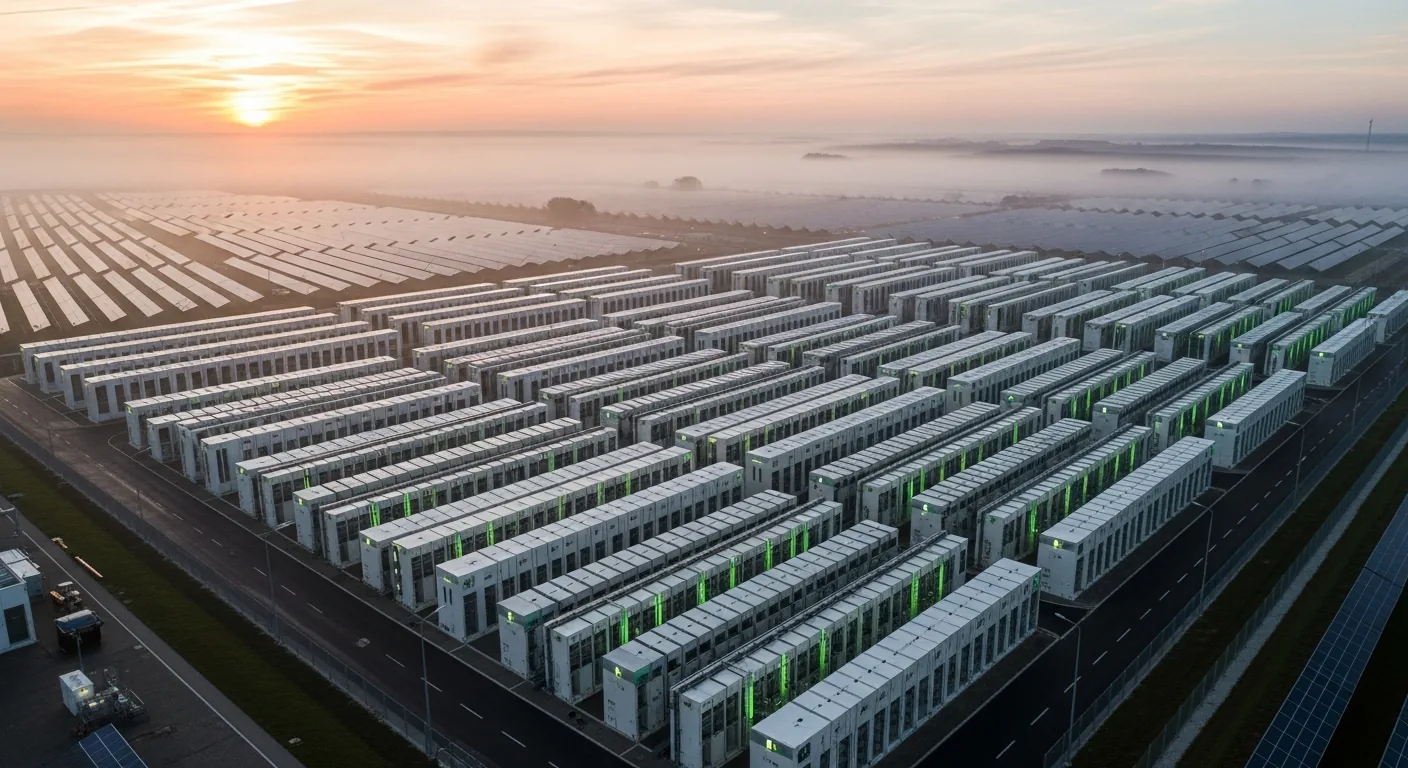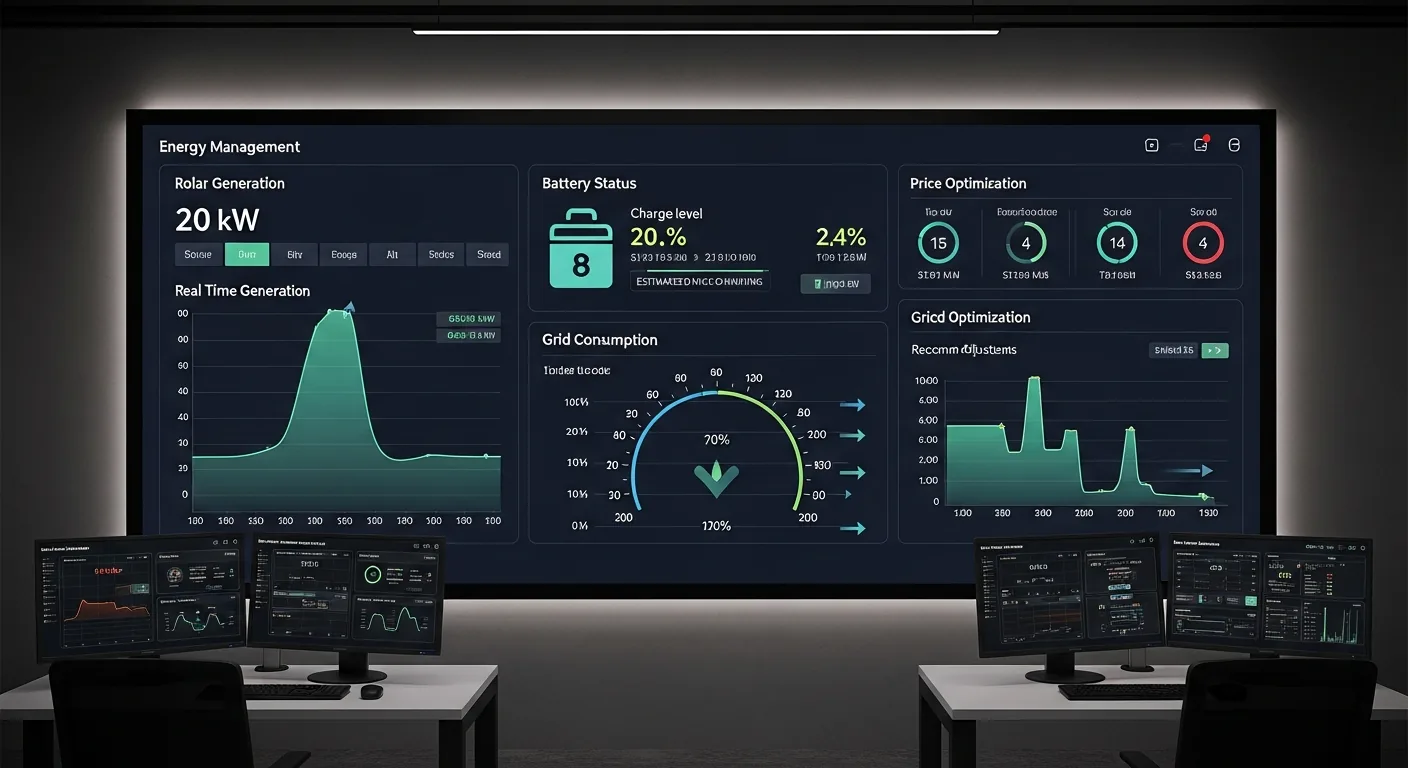
Hardware — solar panels, batteries, CHP units — gets the attention. But the energy management system (EMS) is what turns a collection of equipment into an intelligent, optimised power plant. The right EMS can improve system performance by 15–30%.
What an EMS Actually Does
At its core, an EMS is a software platform that monitors, controls, and optimises energy generation, storage, and consumption in real time. It connects to every asset on your site — solar inverters, battery controllers, CHP units, EV chargers, building management systems, and the grid meter — and makes decisions about when to charge, discharge, generate, or import.
The key functions are: load forecasting (predicting your consumption 24–48 hours ahead), generation forecasting (predicting solar output from weather data), price optimisation (buying when cheap, selling when expensive), and asset dispatch (deciding which equipment runs when). A well-designed EMS can reduce energy costs by 15–30% beyond the savings from the hardware alone.
The Numbers
Real-Time Control
Sub-second decisions on charging/discharging. Automatic peak shaving. Dynamic price response. All autonomous, 24/7.
Performance Gain
15–30% cost reduction beyond hardware savings. On a £400,000/year bill, that's £60,000–£120,000 annually from software alone.
Integration
Connects solar, battery, CHP, EV, HVAC, grid, and market signals. Single pane of glass. API-first architecture.
Peak Shaving and Load Shifting
The most valuable EMS function is peak shaving. The UK's capacity charge (part of the DUoS bill) is based on your highest consumption half-hour in the month. A single spike can cost £5,000–£20,000 in additional charges. The EMS watches your consumption in real time and automatically discharges the battery or reduces non-critical loads when you approach a new peak. For a site with £15,000/month in capacity charges, effective peak shaving can cut this by 40–60%.
Load shifting is equally valuable. The EMS knows your time-of-use tariff and shifts discretionary loads — EV charging, battery charging, water heating — to the cheapest periods. A 500kW EV charging hub can save £30,000–£50,000/year simply by charging at night instead of during peak hours.
The Platform Landscape
The EMS market has matured significantly. Leading platforms include: Schneider EcoStruxure (best for large industrial), Siemens MindSphere (strong analytics), Tesla Autobidder (for Tesla battery systems), and a range of independent platforms like Octopus Powerloop, Origami Energy, and our own Skyline EMS. The key is interoperability — your EMS must talk to every asset on your site, regardless of manufacturer.
We typically recommend open-platform EMS solutions that use standard protocols (Modbus, SunSpec, MQTT) and provide API access. Proprietary, locked-in systems may be cheaper upfront but cost significantly more over the life of the project when you need to add new assets or switch suppliers.
Implementation
EMS deployment is typically 2–4 weeks after hardware commissioning. The system is configured with your tariff structure, asset specifications, and operational priorities. We run a 2-week calibration period to fine-tune the algorithms against your actual consumption patterns. After that, the system runs autonomously with monthly performance reviews.
The cost is typically £15,000–£50,000 for the software license and implementation, depending on site complexity. With annual savings of £60,000–£120,000, the payback is 3–6 months. No other investment in your energy system delivers that return that fast.