Most businesses still treat electricity as a fixed cost. But the gap between grid prices and onsite generation costs is now so wide that continuing to buy 100% from the grid is actively destroying value.
The Grid Price Trajectory
UK industrial electricity prices have risen from 14.5p/kWh in 2019 to 26.8p/kWh in 2026 — an 85% increase in seven years. The drivers are well understood: carbon pricing, gas dependency, network charges, and policy levies. What's less appreciated is the forward trajectory. The UK government has committed to a zero-carbon grid by 2035, but the transition period is expensive. Grid prices are forecast to remain at 24–30p/kWh through 2030, with significant volatility as renewables intermittency and storage build-out create pricing spikes.
For a site consuming 2,000,000 kWh annually — a typical medium-sized industrial facility — the grid bill at 26.8p/kWh is £536,000 per year. With 3% annual inflation, that becomes £621,000 by 2030. Over 10 years, the total grid spend is £6.1 million.
The Onsite Alternative
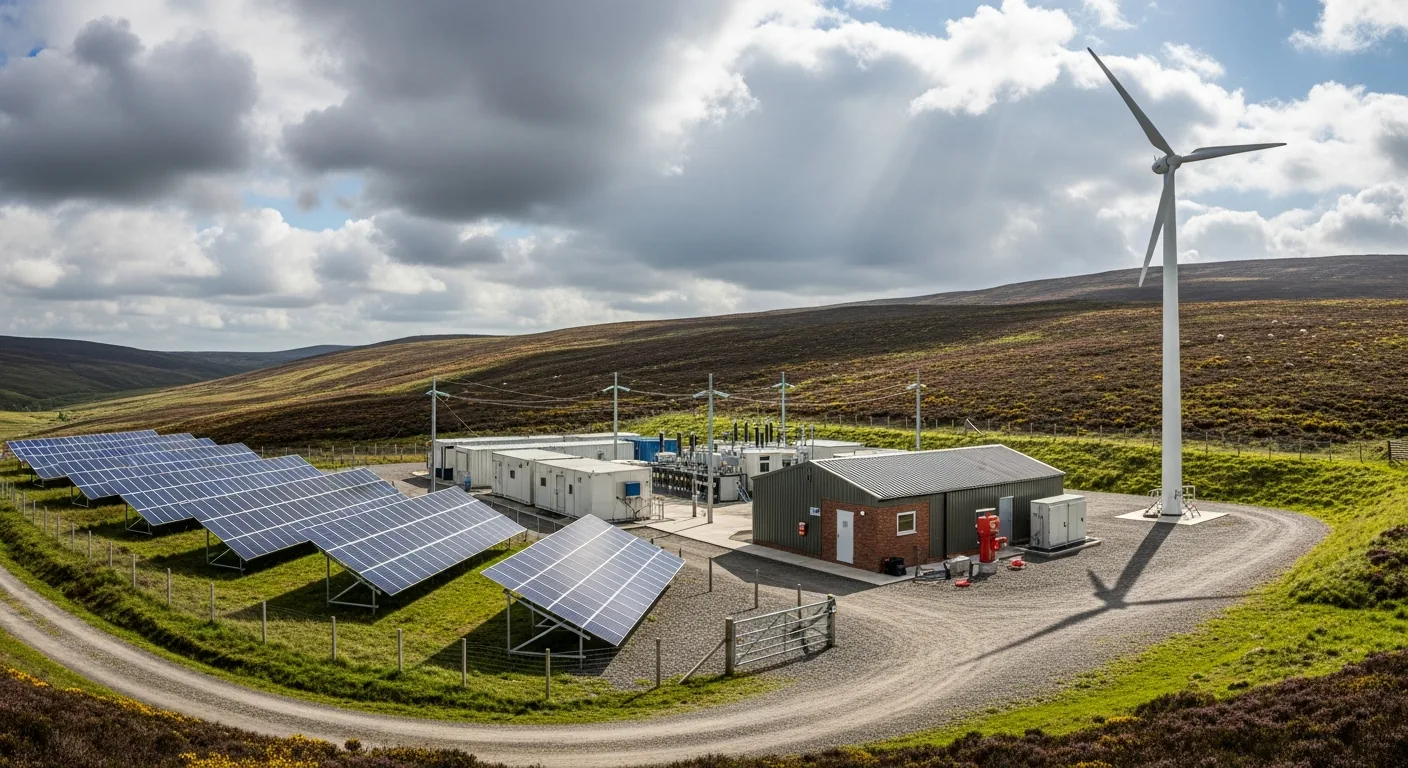
A hybrid onsite system — solar, battery, and CCHP — can reduce grid dependence by 60–80% for most industrial sites. The levelised cost of energy (LCOE) from onsite generation is now 8–14p/kWh, depending on the technology mix. That's a 50–70% discount to grid prices.
Grid-Only Cost
£536,000/year at 26.8p/kWh. Rising to £621,000 by 2030. 10-year total: £6.1 million. Volatile and uncontrollable.
Onsite LCOE
8–14p/kWh for hybrid solar + battery + CCHP. 60–80% grid reduction. 10-year savings: £2.4–£3.8 million.
The Gap
The difference between grid and onsite costs is now £1.2–£1.8 million over 10 years for a typical 2GWh site. That's the cost of business-as-usual.
Hidden Grid Costs Nobody Talks About
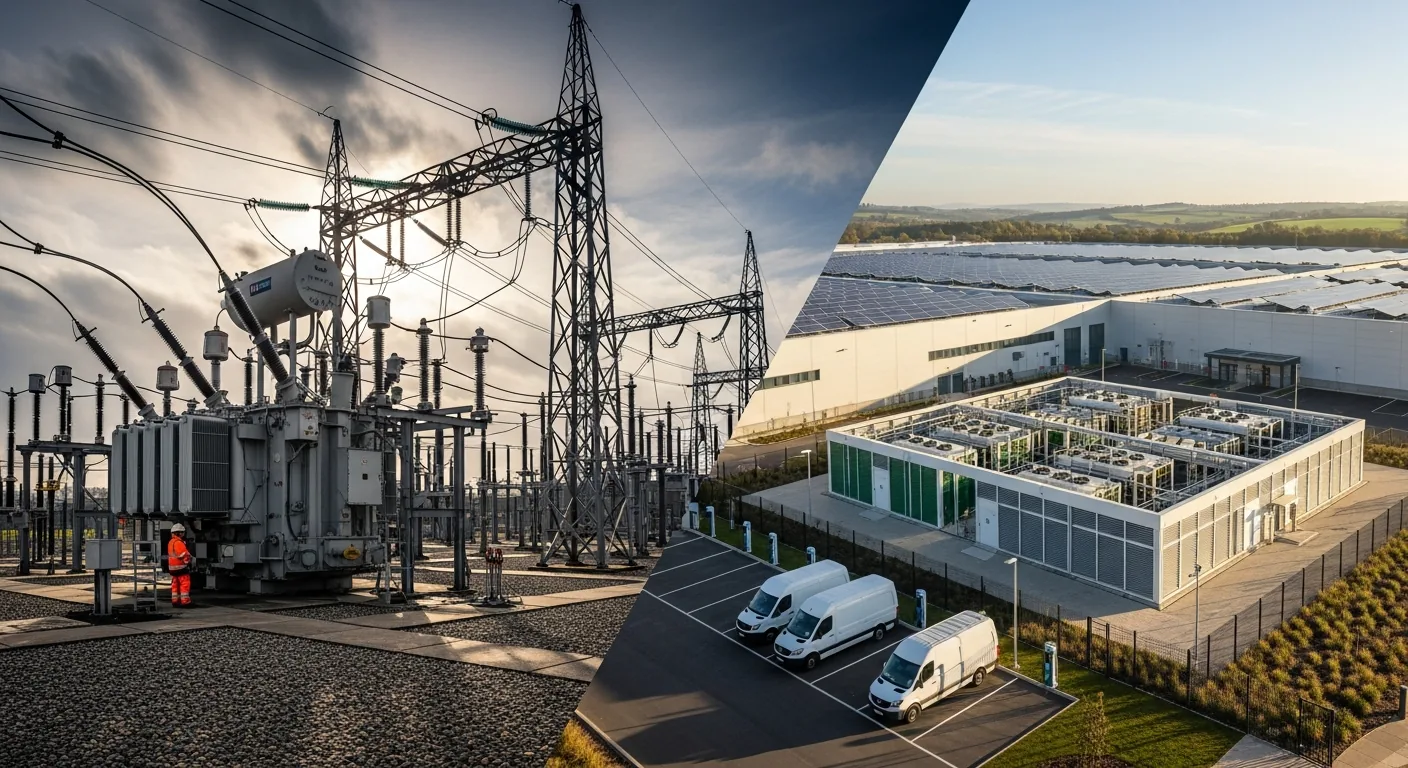
The grid bill is more than the unit rate. Capacity charges, distribution use of system (DUoS) charges, and transmission network use of system (TNUoS) charges add 15–20% to the headline price. For high-demand sites, these can be £50,000–£100,000 per year alone. Onsite generation reduces or eliminates these charges because the energy never travels across the network.
Then there's the cost of resilience. Grid outages cost UK businesses an estimated £1.2 billion per year in lost productivity. A single 4-hour outage at a manufacturing site can cost £100,000+ in downtime, scrapped product, and recovery. Onsite generation with battery backup provides continuity insurance that's not available from the grid.
The CFO Perspective
From a financial perspective, the grid is an uncapped operating expense with upward volatility. Onsite generation is a capital investment with a fixed, predictable cost structure. The choice is between a 10-year spend of £6.1 million with no asset to show for it, or a £400,000–£800,000 capital investment that generates £200,000–£400,000 in annual savings and leaves you with a 25-year asset.
With 100% full expensing capital allowances, the tax relief on the investment is immediate. With zero-CAPEX finance options, the upfront capital can be zero. The business case for onsite generation has never been clearer.