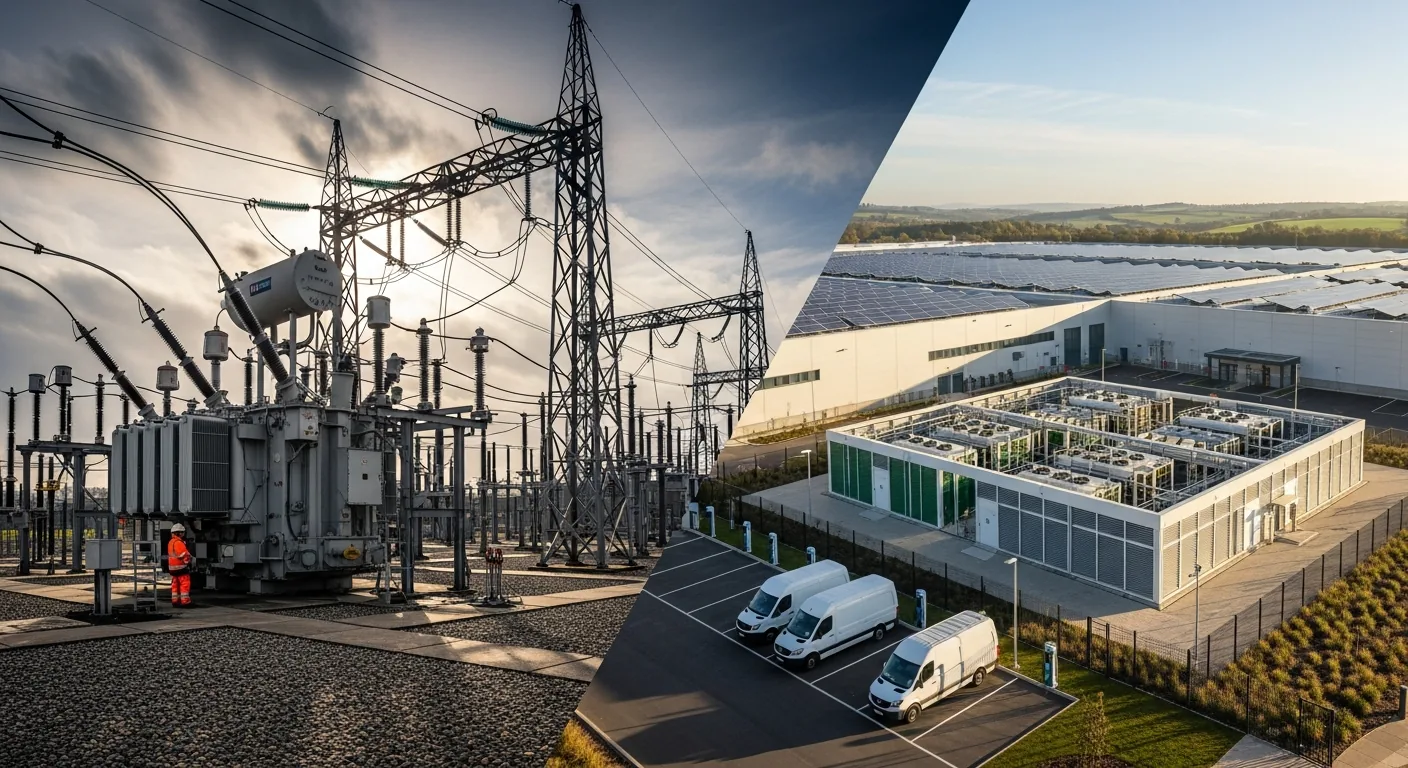
For most sites, grid-tied solar and battery are the optimal solution. But for a specific category of high-value, remote, or resilience-critical sites, a full microgrid — capable of islanding from the grid entirely — is the only answer.
What Is a Microgrid?
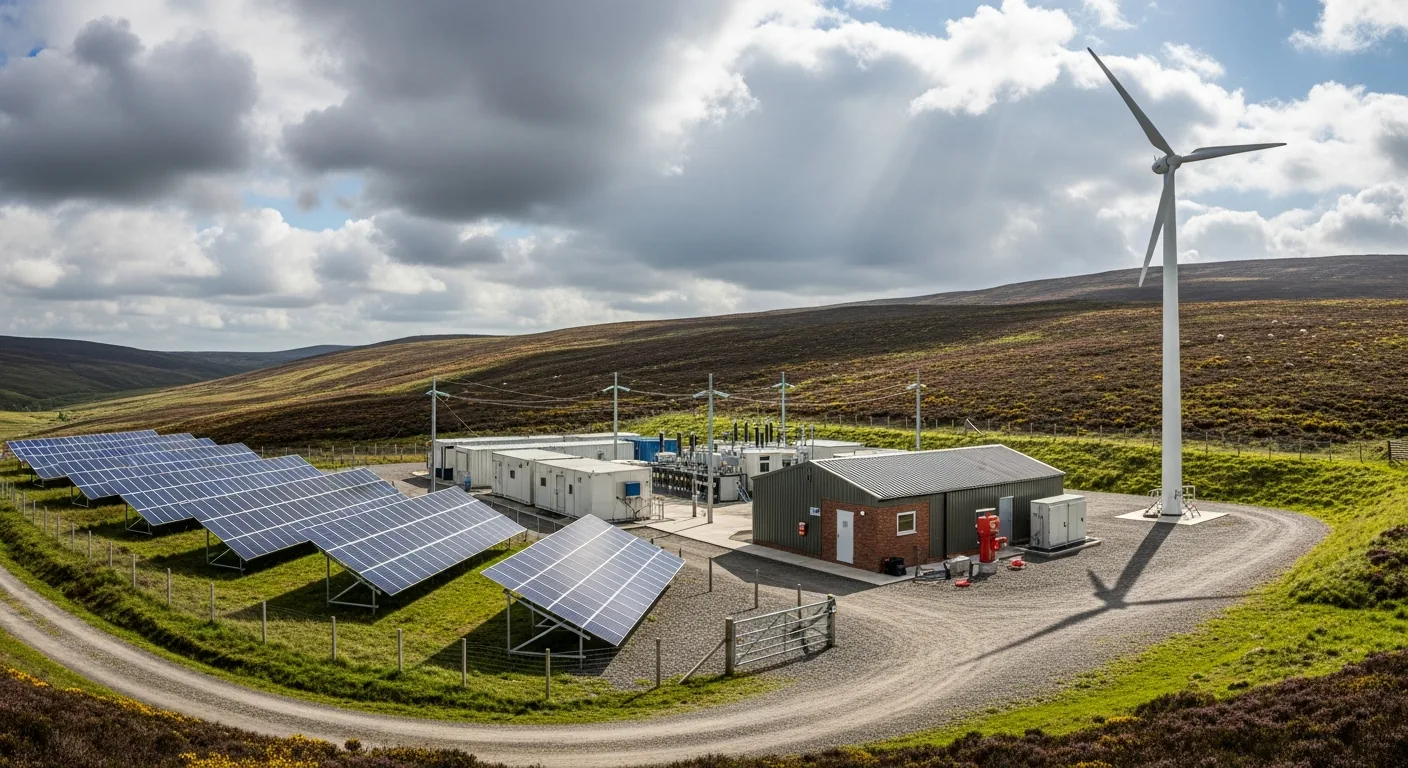
A microgrid is a self-contained energy system that can generate, store, and distribute electricity independently of the main grid. It typically includes multiple generation sources (solar, wind, CHP, fuel cells), battery storage, and smart switching that can disconnect from the grid and operate autonomously. When grid power is available, the microgrid operates in parallel, importing and exporting as needed. When the grid fails, the microgrid islands seamlessly, with no interruption to critical loads.
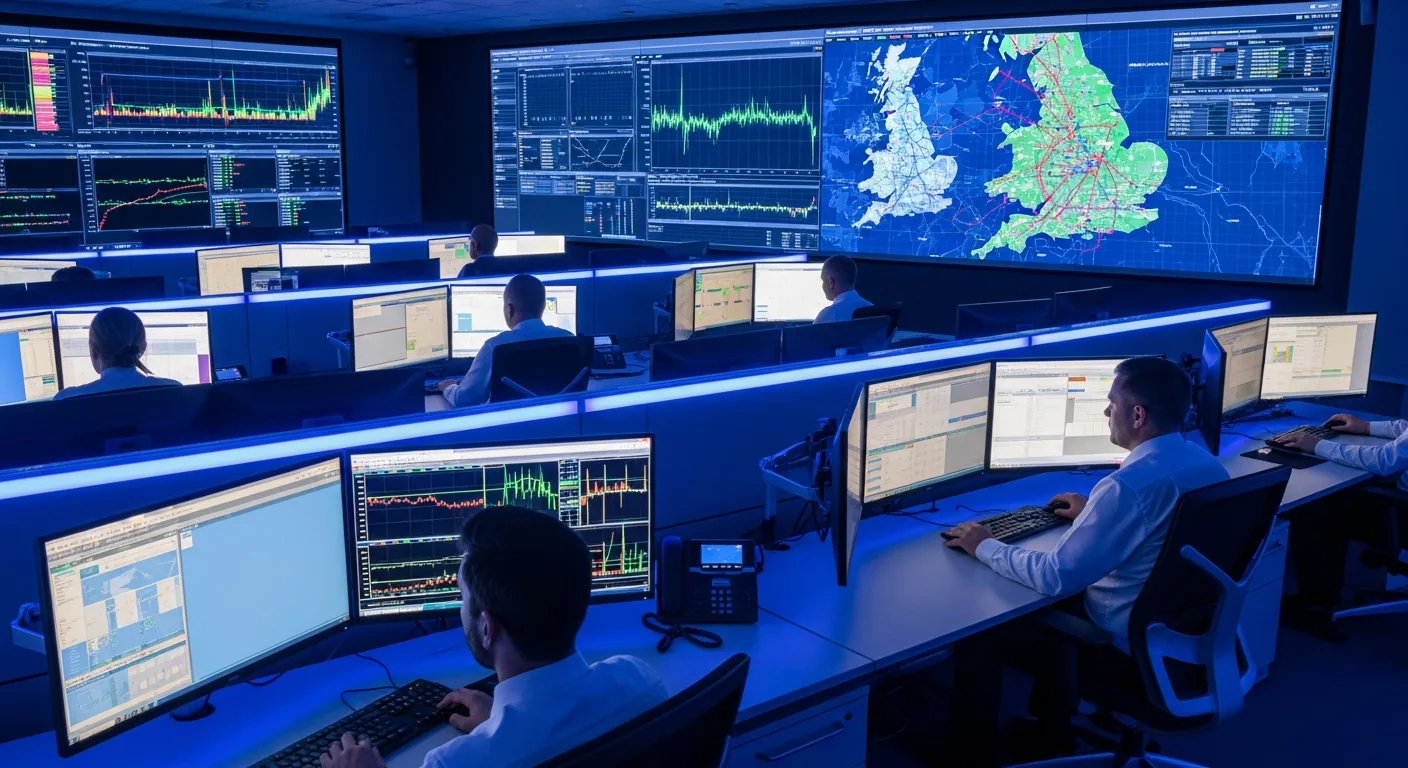
The key technology is the microgrid controller — a sophisticated EMS that manages the transition between grid-tied and islanded modes, balances generation and load in real time, and maintains power quality (voltage, frequency) during transitions. A well-designed microgrid can switch from grid-tied to islanded mode in under 100 milliseconds — faster than most UPS systems.
When Microgrids Make Sense
Remote Sites
Sites without grid access or with weak grid connections where grid upgrades cost £500k–£2m. A microgrid is often cheaper than a grid connection.
Critical Resilience
Data centres, hospitals, military, telecoms where a 1-second outage is catastrophic. Microgrids provide seamless islanding.
High-Value Operations
Pharmaceutical, cold chain, semiconductor where a 4-hour outage costs £100k–£1m. Insurance savings alone justify the investment.
The Economics
Microgrids are expensive. A 2MW system with solar, battery, CHP, and islanding capability costs £2m–£4m installed. The LCOE is 15–25p/kWh — higher than grid-tied solar alone, but lower than diesel backup over a 20-year period. The value is not in cost savings but in risk mitigation and operational continuity.
For a pharmaceutical site where a 4-hour outage costs £500,000 in lost product, a microgrid with 72-hour autonomous capability is insurance. The £3m investment pays back the first time it prevents a major outage. Over 20 years, with 2–3 major outages per decade, the avoided losses are £1m–£1.5m. Combined with grid savings and potential revenue from grid services, the total return can justify the investment.
Designing for Islanding
The critical design challenge is load prioritisation. Not every load can run during islanded mode. The microgrid controller categorises loads into three tiers: critical (always powered), essential (powered during normal islanding), and deferrable (shed during extended islanding). The battery and generation capacity are sized to cover critical + essential loads for the target duration — typically 4–72 hours.
For extended islanding (multi-day), the microgrid needs multiple generation sources. A typical design: solar (daytime generation), battery (4–8 hour buffer), CHP (24/7 baseload), and diesel or fuel cell (backup for extended outages). The redundancy is expensive but essential for sites where grid independence is a business requirement.
Our Approach
We design microgrids for a select category of clients: sites where the cost of a grid outage exceeds the cost of a microgrid. Our process starts with a business impact analysis — quantifying the cost of downtime, the probability of grid failure, and the insurance implications. If the numbers justify it, we design a bespoke system. If not, we recommend grid-tied solar + battery as the optimal solution.
The UK grid is generally reliable, with 99.97% uptime in most areas. But for the 0.03% of hours when it fails, the consequences can be catastrophic. A microgrid is the only solution that guarantees continuity, regardless of what happens to the grid.