Hydrogen has dominated the energy conversation for five years. But for industrial sites, the question isn't whether hydrogen is the future — it's whether fuel cells make sense today, and what the realistic timeline looks like.
The Current State of Fuel Cells
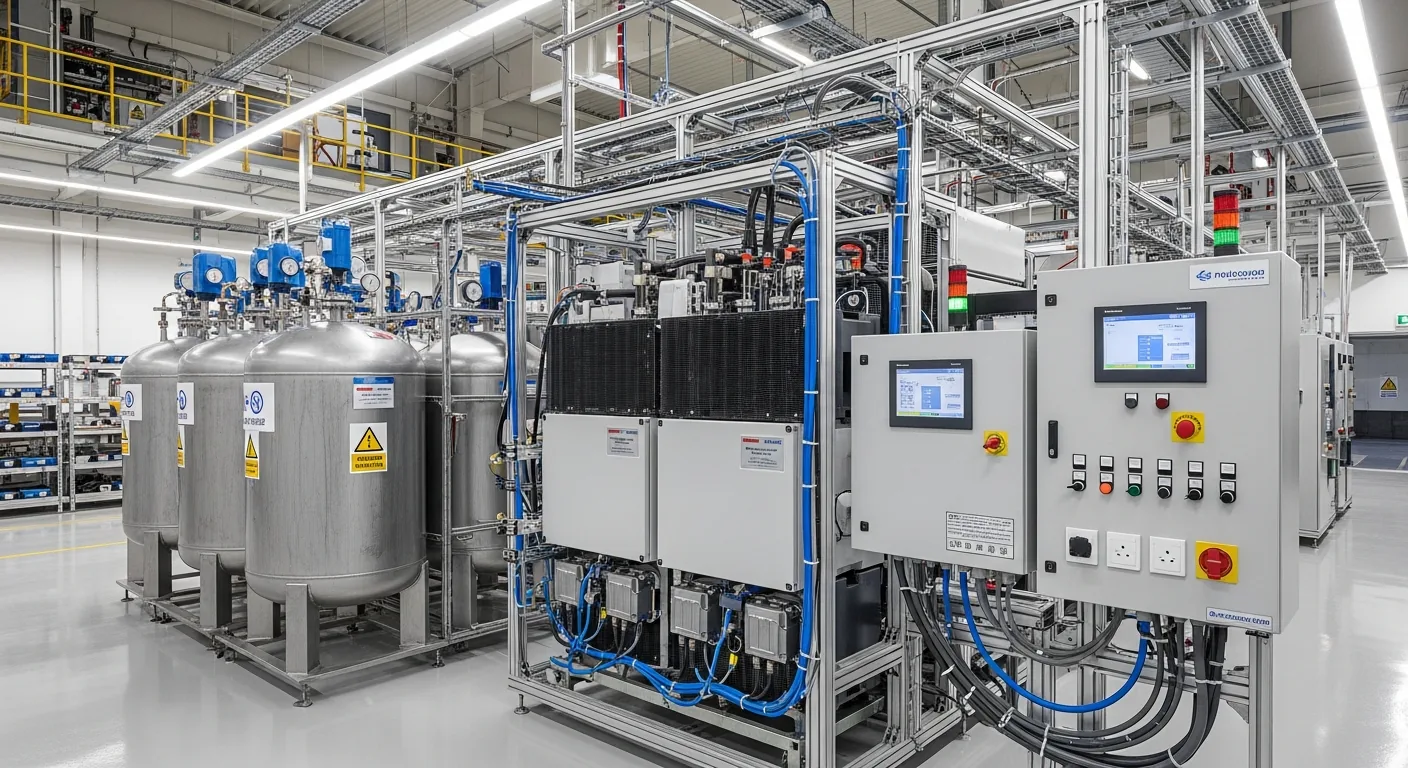
Commercial proton exchange membrane (PEM) fuel cells are now available at 100kW–1MW scale, with 50–60% electrical efficiency and 90% total efficiency when waste heat is recovered. For comparison, a diesel generator is 35–40% efficient, and a gas CHP unit is 35–45% electrical. The technology works. The question is cost.
A 500kW fuel cell system costs £1,200–£1,800/kW installed — that's £600,000–£900,000 for the unit alone. Hydrogen fuel costs £5–£8/kg (green hydrogen) or £2–£3/kg (grey hydrogen). At 50% efficiency, 1kg of hydrogen produces ~16.5 kWh of electricity. So the fuel cost is 12–48p/kWh — competitive with grid prices but not with solar or battery storage.
Where Fuel Cells Actually Win
Fuel cells are not a baseload replacement for the grid — they're a resilience play. For sites that need guaranteed power during multi-day grid outages, a fuel cell + hydrogen storage system is the only technology that delivers. Batteries provide 2–8 hours of backup. Diesel generators require fuel deliveries and have emissions. Fuel cells with on-site hydrogen storage can provide 24–72 hours of autonomous operation, silently, with zero local emissions.
Efficiency
50–60% electrical, 90% total with heat recovery. Superior to diesel (35–40%) and comparable to gas CHP.
Resilience
24–72 hours autonomous operation with hydrogen storage. Silent, zero local emissions. No fuel delivery logistics.
Cost Trajectory
Green hydrogen target: £2/kg by 2030. Fuel cell CAPEX falling 15% annually. Viable for mainstream use by 2028–2030.
The Hydrogen Supply Chain
The biggest barrier is hydrogen availability. The UK currently produces approximately 10 TWh of hydrogen annually, mostly from natural gas (grey hydrogen). The government's 10GW by 2030 target for low-carbon hydrogen is ambitious but uncertain. For sites near industrial clusters — Teesside, Humber, Merseyside — hydrogen pipeline access is already planned. For sites elsewhere, hydrogen must be trucked or produced on-site via electrolysis.
On-site electrolysis is viable for sites with large surplus solar or wind. A 1MW electrolyser produces ~200kg of hydrogen per day, enough to run a 500kW fuel cell for 6–7 hours. The round-trip efficiency is 30–35% (electricity → hydrogen → electricity), so it's not efficient — but it is dispatchable. For sites that need guaranteed backup during multi-day grid events, the inefficiency is acceptable.
Our Recommendation
For most industrial sites in 2026, fuel cells are not yet the primary solution. Solar, battery, and CCHP deliver better economics today. However, sites in the following categories should evaluate fuel cells now:
- Sites with critical 24/7 operations where a 4+ hour outage is catastrophic (data centres, pharmaceutical, cold chain)
- Sites near planned hydrogen infrastructure (Teesside, Humber, Merseyside, Scottish clusters)
- Sites with large surplus renewable generation that could power on-site electrolysis
- Sites with net-zero commitments that require complete fossil-fuel elimination by 2030
We track the hydrogen market closely and model feasibility for qualifying sites. The economics are improving rapidly, and the sites that plan now will be first to benefit when costs cross the threshold in 2028–2030.