Wind turbines have a reputation for being only viable at utility scale. But 2026 has brought new turbine designs, improved planning rules, and better economics that make small wind viable for a specific set of commercial sites.
The 2026 Technology Landscape
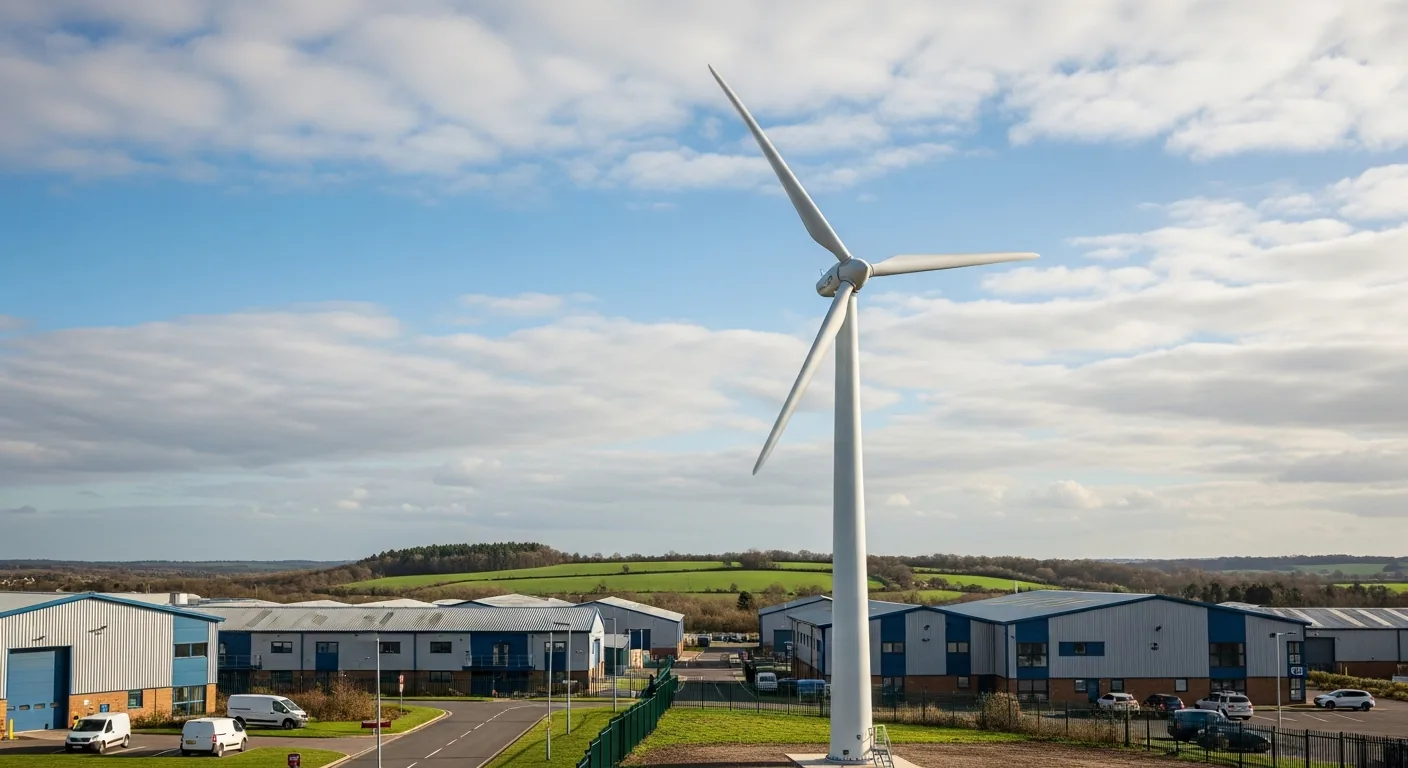
Small wind turbines (50kW–1MW) have improved significantly. Modern designs use direct-drive permanent magnet generators, eliminating the gearbox — the component that historically caused most failures. Blade materials have shifted to carbon fibre composites, reducing weight and increasing efficiency. The result: turbines that are quieter, more reliable, and 20–30% more efficient than designs from 2018.
A 100kW turbine with a 24m rotor diameter at a site with 6.5 m/s average wind speed generates approximately 220,000 kWh/year. At 26.8p/kWh self-consumption value, that's £59,000/year in displaced grid imports. The installed cost is £180,000–£250,000, giving a 3.0–4.2 year payback. With 100% full expensing, the net cost after tax relief is £135,000–£187,500, cutting payback to 2.3–3.2 years.
Wind vs. Solar: The Complementarity
Wind Generation
Strong in winter, at night, and during storms. 100kW turbine at 6.5 m/s = 220,000 kWh/year. Complements solar perfectly.
Site Requirements
6.5+ m/s average wind speed. 24m rotor needs 30m setback. No noise-sensitive neighbours within 200m. Planning permission required.
Economics
£180k–£250k installed. 3.0–4.2 year payback. 14–18% IRR. With full expensing: 2.3–3.2 year payback. 20-year lifespan.
Site Selection Is Everything
Wind economics are highly site-dependent. A turbine at a site with 5.5 m/s average wind speed generates 40% less than at 6.5 m/s. The difference between a good site and a bad site is the difference between a 3-year payback and a 7-year payback. We use LiDAR wind measurement and 12-month on-site anemometry before recommending any turbine installation.
The best sites are exposed locations: coastal areas, hilltops, open farmland, and industrial estates on the edge of towns. Urban sites, sheltered valleys, and sites with significant tree cover are generally not viable. A 50m mast anemometer installed for 12 months costs £5,000–£10,000 — but it's essential insurance against a bad investment.
Planning and Permits
Planning permission is required for all turbines above 15m hub height. The process takes 3–6 months and requires noise assessment, shadow flicker analysis, and ecological survey. The good news: the 2023 National Planning Policy Framework (NPPF) updates have made it easier for commercial turbines in industrial areas, with a presumption in favour of renewable energy where visual and noise impacts are minimal.
Noise is the biggest concern. Modern turbines at 100kW are rated at 35–40 dB at 60m distance — comparable to a quiet conversation. At 200m, they're below 30 dB, inaudible in most environments. We always conduct noise surveys and engage with neighbours before submitting planning applications.
The Hybrid Solar + Wind Strategy
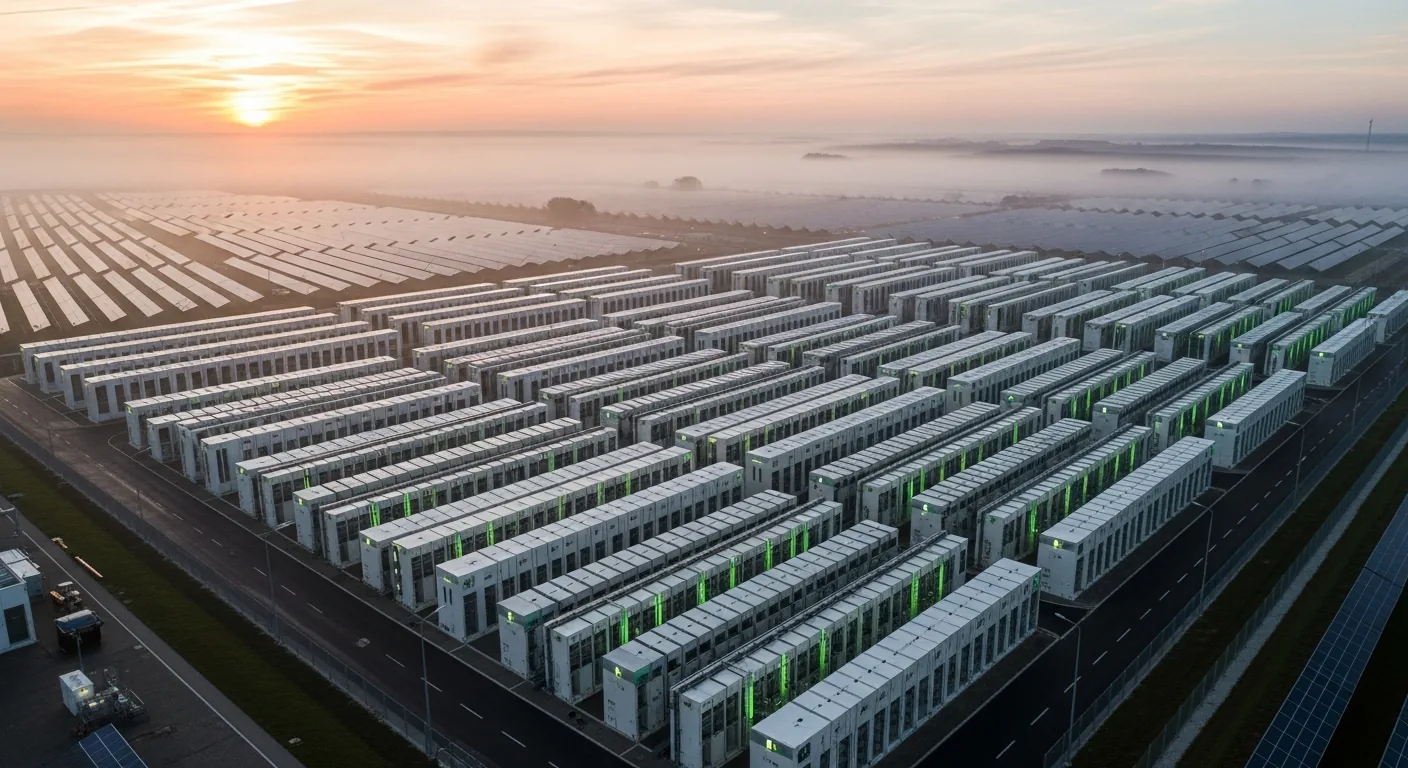
The most compelling case for commercial wind is as part of a hybrid system. Solar generates in summer, daytime. Wind generates in winter, night-time. Together, they flatten the generation profile and reduce the battery size needed for 24/7 coverage. A 500kW solar + 100kW wind + 500kWh battery system can reduce grid dependence by 85–90% for a typical site, compared to 60–70% for solar alone.
We offer free wind feasibility assessments that combine 12-month wind measurement with your consumption profile and solar potential. The analysis gives you a clear payback period, planning risk assessment, and optimal turbine sizing. For qualifying sites, wind is the missing piece that makes full grid independence achievable.