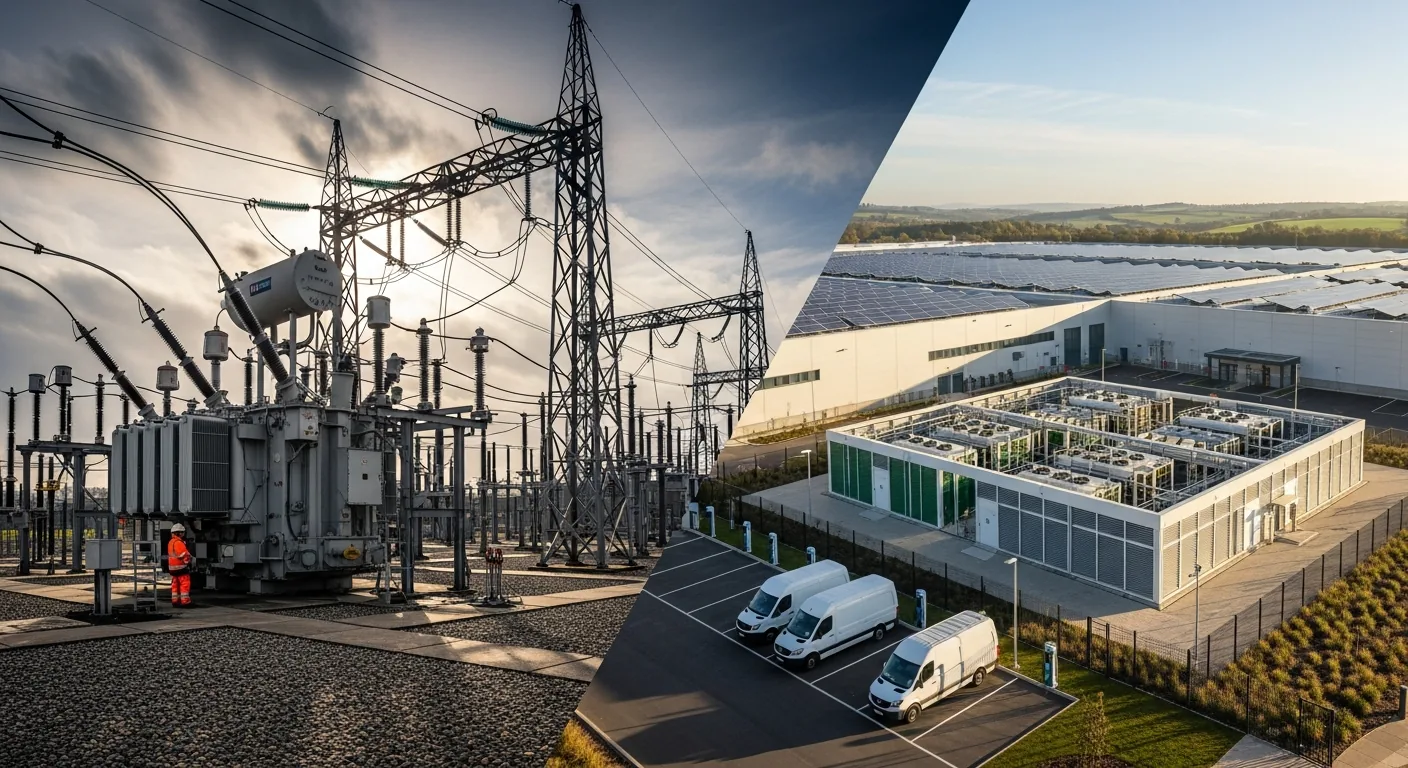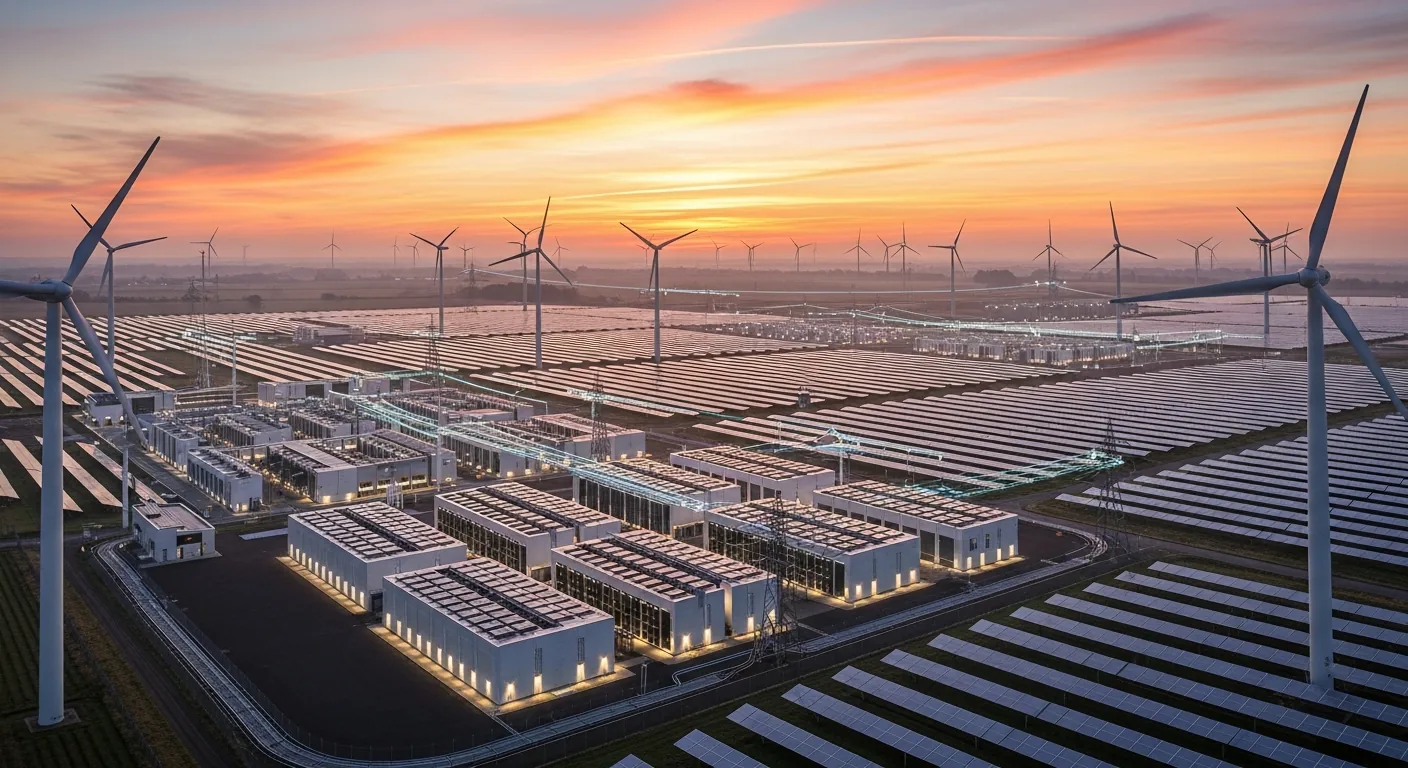
The next 18 months will reshape the UK onsite energy landscape. From regulatory changes to technology breakthroughs, here's what every facilities manager, CFO, and sustainability director needs to prepare for.
1. Grid Prices: Staying High, Getting Volatile
The UK's average industrial electricity price will remain at 24–28p/kWh through 2027. The days of 14p/kWh are not coming back. The key change is volatility: as the grid relies more on wind and solar, periods of surplus (low prices) and scarcity (high prices) will become more extreme. Sites with battery storage will arbitrage this volatility, buying at 5p/kWh and selling at 80p/kWh. Sites without storage will be exposed to the spikes.
Our forecast: 2027 will see 40–60 price spike events above 100p/kWh, concentrated in winter evenings when wind is low and demand is high. A site with 1MWh of battery storage can earn £50,000–£80,000 in arbitrage revenue alone during these events, separate from normal peak-shaving savings.
2. Regulatory Pressure Intensifies
ESOS Phase 3
Mandatory for 250+ employee companies from 2027. Requires net-zero action plans, not just reporting. Onsite generation is the fastest compliance route.
Building Regulations
Part L updates mandate onsite renewables or low-carbon heating for new commercial builds. Solar-ready and EV-ready requirements now standard.
Carbon Border Tax
EU CBAM equivalent expected for UK imports from 2028. Low-carbon operations will be a competitive advantage for export-oriented businesses.
3. Technology Inflection Points
Several technologies will reach commercial tipping points in 2027:
- Solid-state batteries will enter the commercial market at 1.5× energy density of lithium-ion, enabling 2MWh systems in the same footprint as today's 1MWh. This halves the space requirement for battery storage.
- Green hydrogen will reach £3.50/kg at industrial hubs, making fuel cells viable for 24/7 backup. Sites near Teesside, Humber, and Merseyside should evaluate hydrogen readiness now.
- AI-driven energy management will become standard. Machine learning models that predict consumption, generation, and prices 48 hours ahead will improve EMS performance by 10–15% over rule-based systems.
- Agrivoltaics (solar panels over farmland) will gain planning acceptance, opening new sites for ground-mount solar that were previously restricted by green belt rules.
4. Finance Models Evolve
Zero-CAPEX models will expand beyond PPA and EaaS to include "energy-as-a-utility" subscriptions. You pay a fixed £/kWh rate (lower than grid) and the provider owns, operates, and maintains all equipment. The subscription model removes capital constraints, balance sheet impact, and technology risk from the customer. We expect 50% of commercial solar installs to use zero-CAPEX by 2028.
Green bonds and sustainability-linked loans will increasingly finance onsite energy. The UK Green Gilts programme has demonstrated institutional appetite for green debt. Corporate green bonds now price 20–40 basis points lower than conventional debt. For large-scale projects (£5m+), green financing is becoming the default.
5. The Talent Shortage
The biggest constraint on the energy transition is not technology or capital — it's people. Qualified energy engineers, project managers, and electricians are in acute shortage. MCS-accredited installers have 3–6 month backlogs. Grid connection applications take 6–18 months. The sites that move fastest will secure the best resources and earliest completion dates.
Our recommendation: start your energy assessment now. Even if you don't install until 2028, the planning, permits, grid application, and procurement process takes 12–18 months. The sites that wait until 2027 to begin will find themselves competing for scarce resources and facing 2029 completion dates.
The Bottom Line
2027 will be a year of acceleration, not waiting. Grid prices will stay high. Regulations will tighten. Technology will improve. Finance will become more accessible. The only risk is delay. The businesses that act in 2026 will lock in lower costs, better technology, and earlier compliance. The businesses that wait will pay more and compete for scarce resources.
We publish this outlook to inform your planning. The next step is a free site assessment that models your specific profile against 2027 pricing and technology. The data takes 48 hours to produce. The decision is yours.