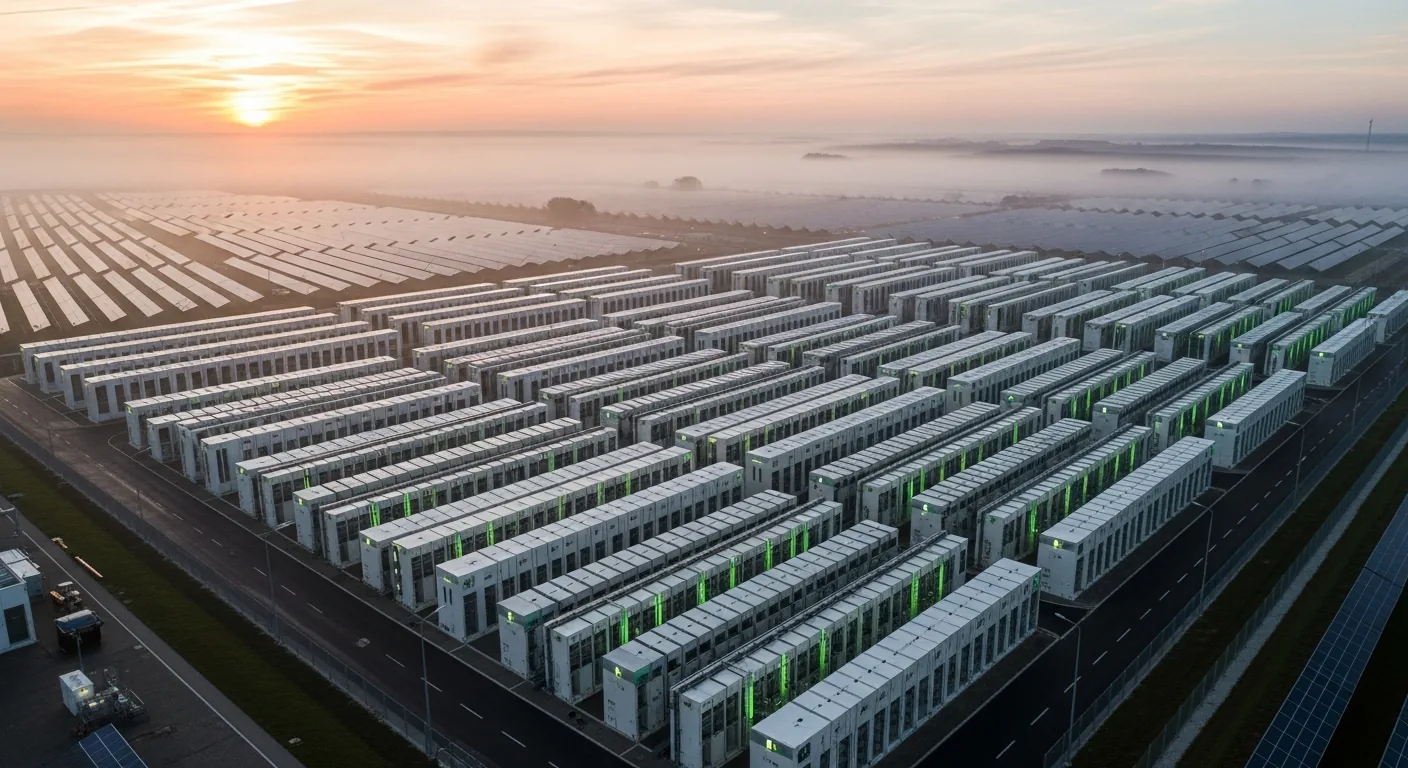
New amendments to the Building Regulations and the revised Energy Savings Opportunity Scheme (ESOS) place greater emphasis on onsite generation and battery storage for qualifying commercial sites.
What Changed in the 2026 Amendments
On 15 May 2026, the Department for Energy Security and Net Zero (DESNZ) published amendments to Part L of the Building Regulations (Conservation of Fuel and Power) that significantly raise the bar for onsite energy requirements in new commercial and industrial developments over 1,000m².
The key changes are threefold. First, the minimum onsite generation requirement has increased from 10% to 20% of predicted annual energy demand. Second, new developments must now include battery storage capacity equal to at least 30% of their installed generation capacity. Third, all qualifying sites must demonstrate a feasible pathway to net-zero operational emissions by 2040.
ESOS Phase 3: The Mandatory Assessment Gap
The ESOS Phase 3 compliance deadline is now 5 December 2026 for qualifying organisations. The critical update is that energy audits must now include a specific assessment of onsite generation feasibility. Previously, ESOS audits focused primarily on demand reduction. The new regulations require auditors to evaluate whether battery storage, solar PV, cogeneration, or heat pumps could viably reduce grid dependency.
For sites that qualify, the audit must include a cost-benefit analysis with 10-year and 25-year projections. This is where many in-house energy teams are struggling — the analysis requires granular half-hourly load data and an understanding of export tariff structures, capacity market dynamics, and technology-specific degradation curves.
Battery Storage: The Sticking Point
The 30% storage requirement is proving the most contentious element of the new regulations. For a site with a 500kWp solar array, this means 150kWh of battery storage. At current commercial BESS prices, that adds roughly £45,000–£60,000 to the project. However, the regulations allow for this cost to be offset against grid connection fees and infrastructure upgrades, which many developers are not yet aware of.
More importantly, the regulations now recognise aggregated battery systems across adjacent sites within the same ownership. This means a developer with multiple units on an industrial park can centralise storage, reducing per-unit costs significantly. The guidance is clear, but the implementation is complex — and this is where expert input pays dividends.
What This Means for Your Site
If you are planning a new commercial or industrial development, these regulations are now in force. The 20% onsite generation and 30% storage requirements are not optional — they are building control conditions. Local authorities have been instructed to withhold completion certificates for non-compliant sites.
For existing sites, the ESOS Phase 3 requirements create a new compliance layer. If your organisation qualifies for ESOS (over 250 employees or turnover over £44m), your next audit must include a specific onsite generation feasibility assessment. Failing to include this assessment is now a compliance breach, with penalties of up to £50,000.
Practical Next Steps
- New developments: Engage an energy consultant at RIBA Stage 2 to model generation requirements and ensure the M&E design accounts for the 20% generation and 30% storage thresholds.
- Existing sites (ESOS): Review your upcoming ESOS audit scope. Ensure your lead assessor is qualified to evaluate onsite generation — many are not.
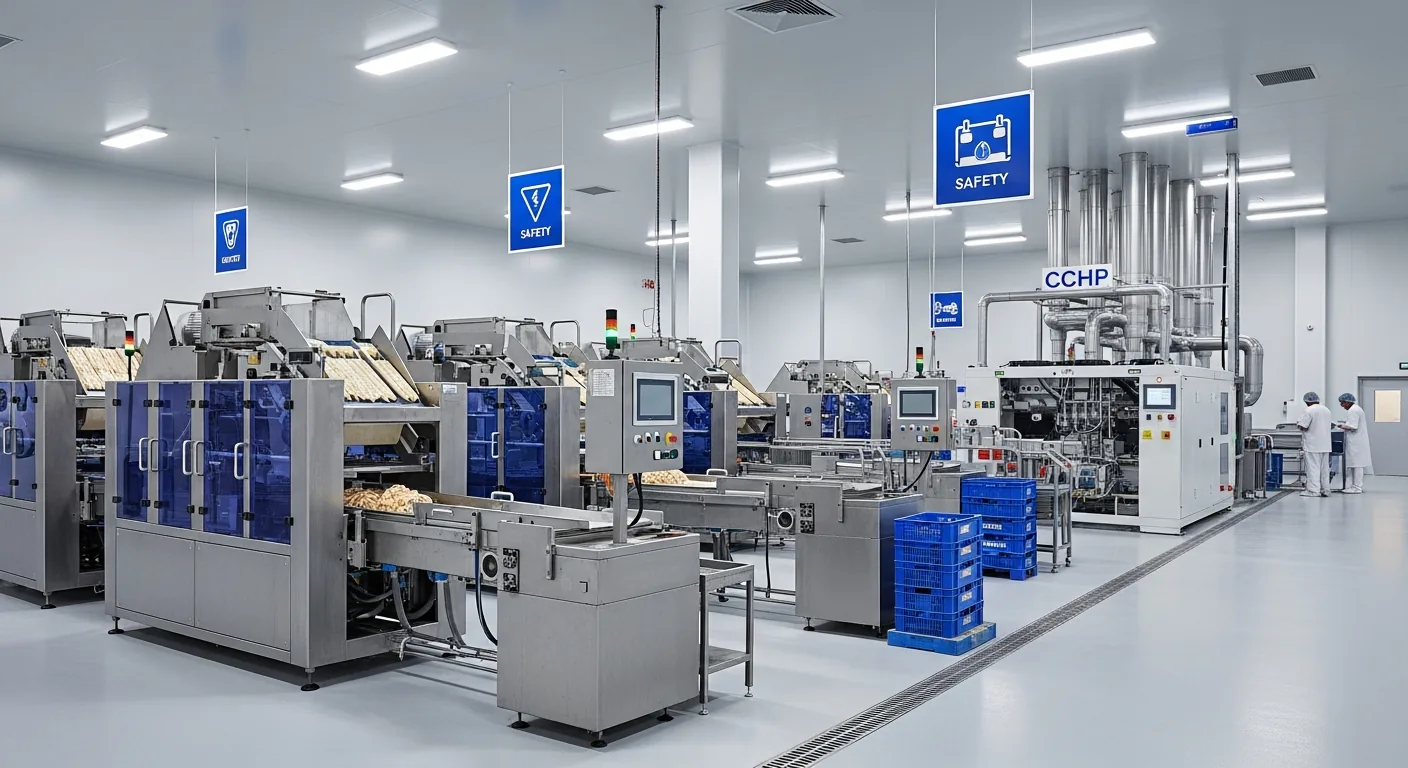
- Retrofit opportunities: The regulations allow for technology-agnostic compliance. A 1.2MW CCHP unit can satisfy the 20% requirement for a high-thermal-demand site, while a 500kWp solar array plus 150kWh BESS may be better for a lower-demand site with roof space.
Skyline DC Energy has completed feasibility assessments for over 40 UK commercial sites under these new regulations. Our approach starts with your interval data — half-hourly consumption patterns that reveal where generation and storage will have the greatest impact. We then model the specific mix of technologies that deliver compliance at the lowest lifetime cost, not just the lowest capital cost.
If you need a compliance assessment or an ESOS Phase 3 audit that includes onsite generation feasibility, get in touch. The deadline is firm, and the penalties are real.